Safety comes first. Our goal is to give you an exciting, safe and positive boat experience. On tour, the passengers’ safety is the most important factor for the tour to be a success.
The boat and equipment meet the requirements of the Norwegian Maritime Authority’s regulation on operating vessels carrying 12 or fewer passengers.
We always listen to the passenger who is least comfortable in the boat and drive according to conditions, so that everyone has a good experience and wants to join more tours. We plan the tours so that we have to go directly into heavy head seas as little as possible, to avoid pounding and slamming. We run with a higher self-imposed safety margin than many others in the RIB industry and do not offer jumping in waves or chasing other boats. “If you want to jump the highest and furthest by boat, you should not choose us as the provider of your tour.” But if you care about high safety, then we are a good choice.
Professional RIBs are very safe boats
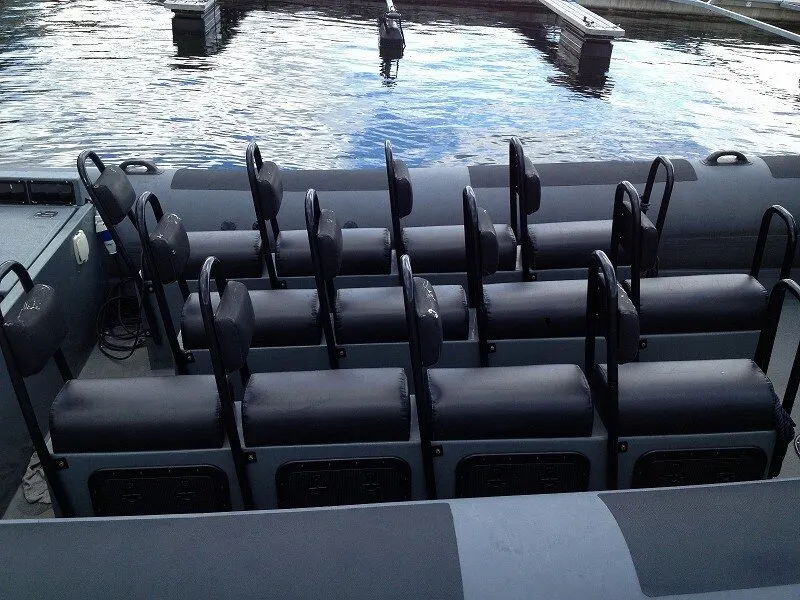
Professional RIBs are built for this kind of activity, designed and made to the strictest requirements so they can carry all our passengers safely even in rough seas. A RIB is a very stable boat; all passengers can stand on the same side without the boat heeling significantly. The RIB has many independent buoyancy chambers, so in practice it will never sink. The boat is fitted with jockey seats, which we consider the only thing that works when driving in waves. In addition, the boat has a sharp V-hull that makes driving in waves more comfortable and safe. In our opinion, a professional RIB is the safest thing you can be in at sea.
Speed
A RIB is not primarily a fast boat, but a very seaworthy and safe boat that can keep a good, comfortable cruising speed even in rough conditions. When we drive slowly in narrow sounds we keep 5 knots. In large parts of the inner archipelago there are 30-knot speed limits; when we are offshore we cruise at about 40 knots if conditions allow. To some this may sound fast, but when you experience it you will see that it is not extreme or dangerous in any way, but a fantastic experience. It is also calmer in the boat the further back you sit.
Personal safety equipment for passengers
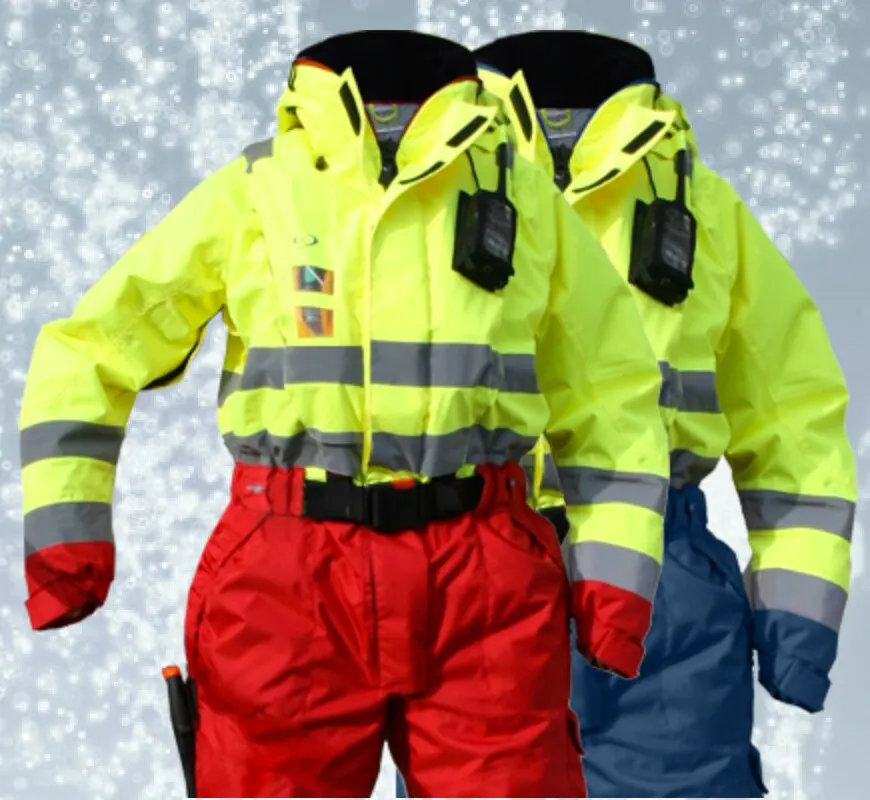
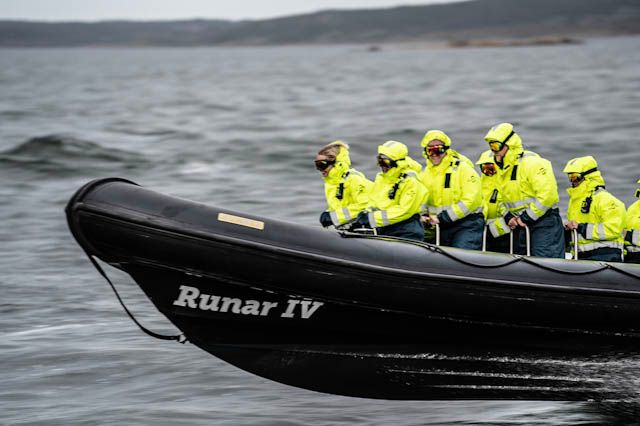
We are one of few operators using survival suits approved to the newest and strictest requirements for passenger transport. Every passenger is lent their own survival suit of the type KI-Elements Ki-Suit 165. The main features of this suit are:
- A survival suit with hood and thermally insulated winter lining. A person who falls into ice-cold water wearing it should survive at least 1 hour.
- The suits have 165 newtons of buoyancy (three times more than old life jackets) and a collar that turns you around in the water even if you are unconscious.
- Approved to visibility requirements (signal yellow and reflectors).
- Water-repellent. The suits tolerate a lot of spray and rain.
- Lifting strap in the belt.
- Option of manual release.
- Option of inflating the flotation lung yourself if everything else fails.
- Ski goggles when needed.
Insurance
The boat with passengers is insured for up to NOK 30 million per total loss event. Equipment you bring along is under no circumstances covered by the insurance.
Safety equipment on board
- VHF
- Handheld VHF with GPS, which also has a distress button
- Chartplotter
- EPIRB: satellite emergency beacon (sends position and boat name to the rescue centre via satellite if triggered)
- Flares and rocket flares
- Health, safety and environment (HSE) plan
- First-aid equipment according to the regulations
- Rescue line (throwing line)
- Fire extinguisher
- Rescue grating
- Anchor
- Drogue (sea anchor)
- Ropes
- Tools for simple on-the-spot repairs
- Digital and analogue compass
- Knife
- Mobile phone
- Paper charts
When we run several boats together, as we often do, this also gives increased safety and security for all passengers in unforeseen situations.
Our skippers
All our skippers meet the Norwegian Maritime Authority’s minimum requirements for driving a boat with up to 12 paying passengers:
- Certificate as Deck Officer Class 5L
- Navigation
- Rules of the road at sea
- Bridge watchkeeping and use of radar
- Ship theory
- Safety
- Technology / engine theory
- First aid
- SRC/VHF
- Basic safety course for ships