
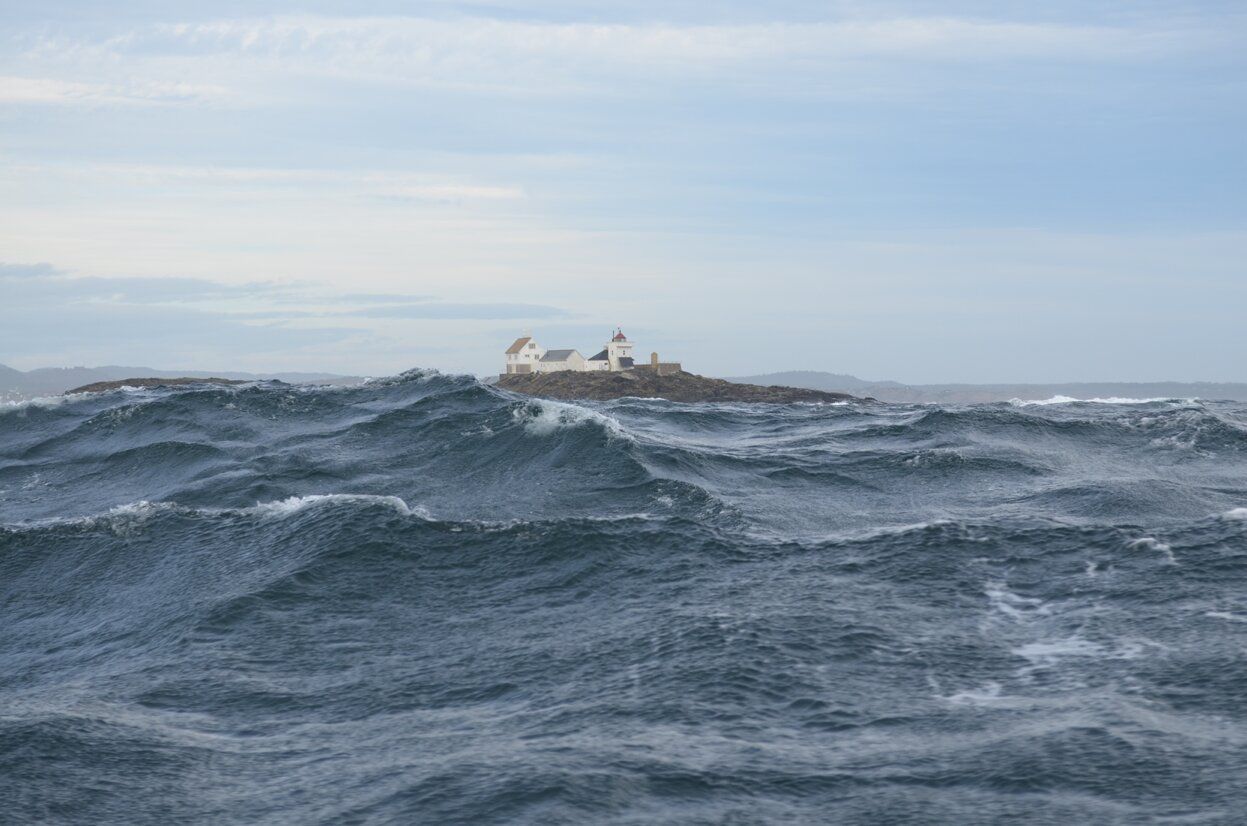
Tvistein lighthouse is the southernmost coastal lighthouse in Vestfold, and the southernmost lighthouse on our RIB tour “All lighthouses in Vestfold”. To get there we must also cross the Rakkebåene. The Rakkebåene are a wide reef of shoals and skerries 1–5 m deep in Larvik municipality, Vestfold, west of the mouth of the Larvikfjord and south of Stavern. It is notorious waters with many shipwrecks. The word “rakke”, used about dogs, shows that the waters were considered particularly difficult.
Tvistein stands on the eastern one of two small islets about three kilometres south of Hummerbakkfjorden. The name means “two stones”, which in this case refers to round, stone-like islets. The rock on Tvistein is of volcanic origin and the island has no smooth rock slabs.
The lighthouse was built in 1908. The light stands seventeen metres above the highest water level and reaches 13.2 nautical miles. The lighthouse was electrified in 1951, and at the same time a new tower and a new keeper’s house were built. It was a family lighthouse until the end of the 1950s, when it became a rotation station. In 1987 the lighthouse was automated and became unmanned.
The lighthouse harbour at Tvistein is sheltered from the south-west but not from the north. There can be a lot of swell and sea in the harbour, so we rarely go ashore, but there is good depth alongside the quay.
Tvisteins Venner aims to renovate and restore Tvistein lighthouse to its original standard as far as possible. They want to open the lighthouse for overnight stays and rental as soon as it is technically possible, in line with other lighthouses in the Kystled network. The operating group is made up of people from Kystlaget Fredriksvern, Brunlanes Jeger og Fiskerforening and Anvik Bygdelag.